





How to Use Jaali in Contemporary Interiors
A practical guide to bringing one of India’s most recognisable architectural elements into a modern home
Jaali has been part of Indian architecture for centuries.
Traditionally used for ventilation, privacy, light control and ornamentation, jaali can still have a strong place in contemporary interiors.
The key is to avoid making it look like a decorative element added afterward.
Instead, treat jaali as part of the architecture and spatial planning.
When paired with clean forms, neutral colours and modern materials, it can create an interior that feels distinctly Indian without looking traditional or dated.
1. Use Jaali as a Room Divider
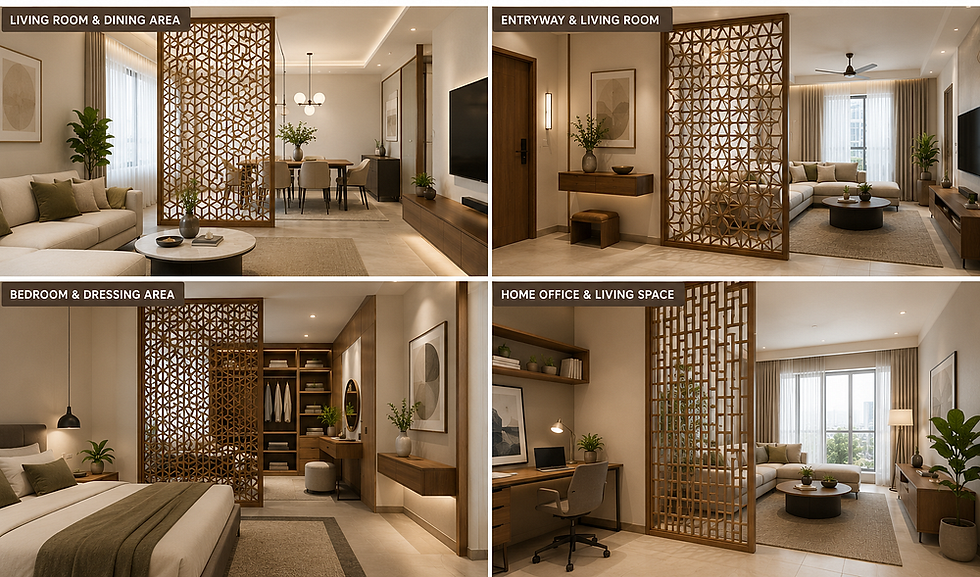
One of the most effective applications is using jaali to divide spaces without completely closing them off.
For example:
Living room and dining area
Entryway and living room
Bedroom and dressing area
Home office and living space
A jaali partition allows light and air to pass through while creating a sense of separation.
The modern approach:
Choose a large-scale geometric pattern rather than a highly ornate traditional design.
Pair it with simple furniture and a restrained colour palette.
The goal is separation without visual heaviness.
2. Create a Contemporary Entrance

The entrance is an ideal place for a jaali feature.
Instead of using a large decorative wall, consider a subtle jaali panel beside or behind the main door.
It can:
Filter natural light
Create privacy
Add depth
Introduce Indian character
Create a strong first impression
A wooden or metal geometric jaali combined with stone, plaster or warm lighting can look particularly sophisticated.
3. Integrate Jaali Into the TV Wall

Jaali doesn’t always need to be a standalone partition.
It can become part of a TV-wall composition.
For example:
Marble + walnut + geometric jaali + concealed lighting
The jaali can be used on one side of the TV unit while the rest of the wall remains relatively simple.
This creates contrast without making the entire wall decorative.
Use jaali as one layer of the design — not the whole design.
4. Design a Modern Mandir With Jaali
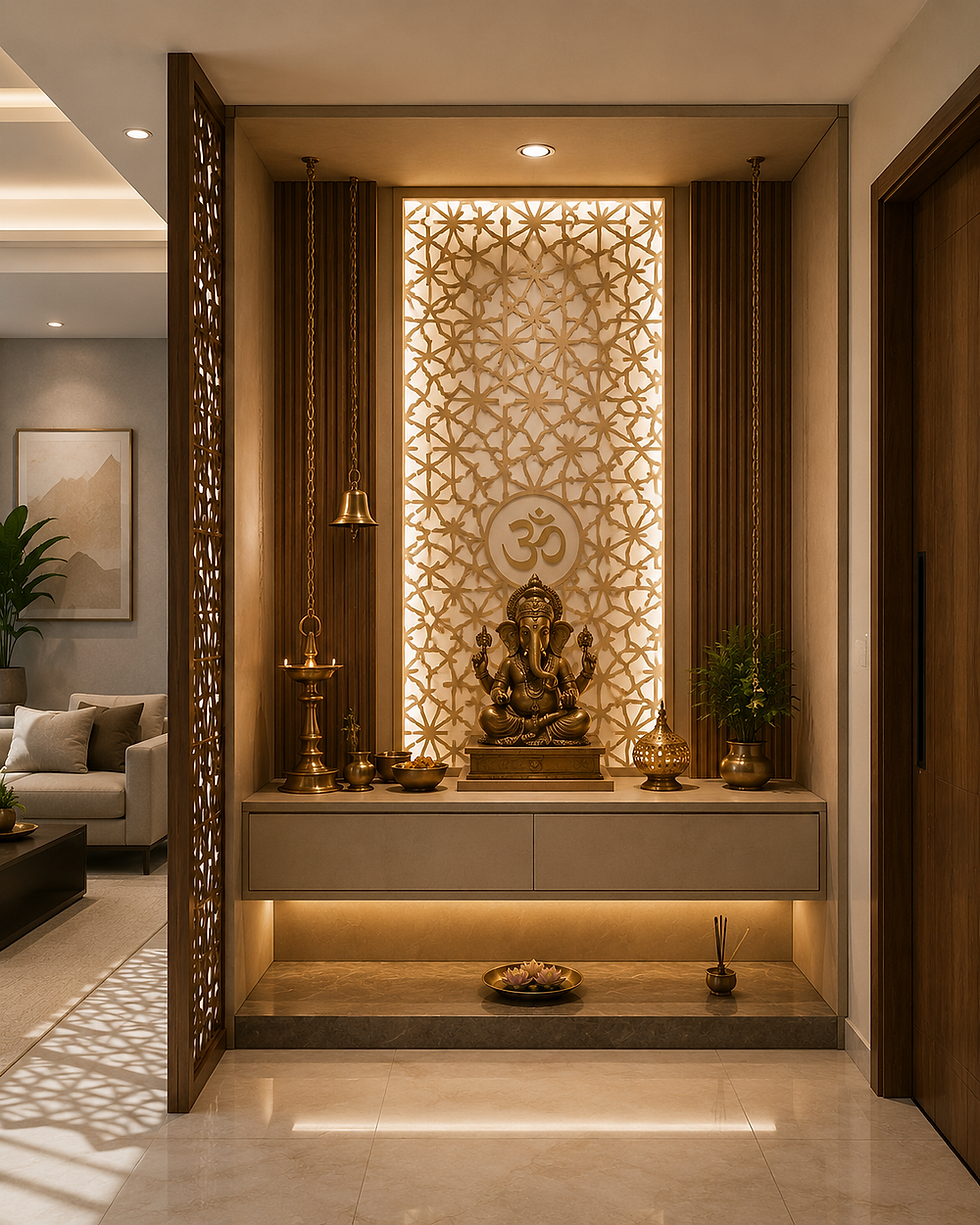
Jaali works naturally with contemporary mandir designs.
Instead of a heavily carved wooden temple, consider:
CNC-cut wooden panels
Backlit jaali
Fluted wood
Stone niches
Brass accents
Concealed warm lighting
A backlit jaali can create beautiful shadows and give the mandir a peaceful, architectural quality.
The result can feel sacred, elegant and contemporary at the same time.
5. Use Jaali to Filter Light

Jaali isn’t only decorative.
One of its traditional strengths is its ability to filter sunlight.
A strategically positioned jaali can soften strong daylight while creating interesting patterns of light and shadow.
Consider using it near:
Windows
Balconies
Staircases
Semi-open areas
Entryways
This is where traditional Indian architecture can provide a genuinely useful modern design solution.
6. Choose the Right Material

Jaali can be created in many different materials.
Wood
Warm and natural.
Works well with:
Walnut + beige + brass
Metal
More contemporary and lightweight visually.
Works well with:
Black metal + stone + neutral upholstery
CNC panels
Ideal when you want precise geometric patterns.
Stone
More substantial and architectural.
Works particularly well in luxury interiors.
Glass or acrylic
Can create a lighter, more contemporary interpretation.
The material should relate to the other finishes in the room.
7. Keep the Pattern Contemporary

This is where the biggest transformation happens.
You don’t necessarily need traditional floral or highly intricate motifs.
Instead, explore:
Geometric patterns
Linear grids
Abstract Indian motifs
Minimal latticework
Repeating arches
Contemporary interpretations of traditional patterns
A simplified pattern can retain the cultural reference while fitting naturally into a modern interior.
8. Use Lighting to Highlight the Jaali

Lighting can completely change how a jaali looks.
Try:
Backlighting
Concealed LED strips
Warm spotlights
Wall washers
Soft floor lighting
Backlighting is particularly effective because it highlights the pattern and creates depth.
However, avoid excessive brightness.
The light should reveal the jaali — not overpower it.
9. Don’t Use Jaali Everywhere

One of the easiest ways to make a contemporary interior feel visually busy is to repeat the same decorative element too many times.
If you already have a strong jaali partition in the living room, you may not need another large jaali wall in the bedroom.
Instead, repeat the idea subtly.
For example:
Large jaali partition → small jaali cabinet detail → similar geometric pattern in artwork
This creates continuity without repetition becoming predictable.
10. Combine Jaali With Modern Materials

Jaali becomes much more contemporary when contrasted with clean, modern materials.
Try combinations such as:
Warm & Elegant
Walnut + beige stone + brass + wood jaali
Modern
White stone + oak + black metal jaali
Earthy
Terracotta + natural wood + textured plaster + jaali
Minimal
Off-white + light oak + champagne metal + subtle geometric jaali
The contrast between traditional craftsmanship and modern materials is what makes the design interesting.
The Golden Rule
Let the jaali be the cultural reference, not the entire theme.
Keep the:
Furniture → contemporary
Layout → functional
Colours → controlled
Materials → coordinated
Jaali → the character
This creates a home that feels Indian, modern and timeless rather than overly traditional.
Final Thought
Jaali doesn’t need to look like something from a palace to feel Indian.
A simple geometric panel, a softly backlit partition or a carefully designed wooden screen can introduce the same sense of craftsmanship in a much more contemporary way.
Traditional craftsmanship gives the space its identity.Modern design gives it relevance.
The best contemporary Indian interiors know how to use both — with restraint and intention.


Comments